Every roofing company runs on the same fuel: a steady flow of homeowners who need a roof. The hard part is finding the next job before your competitor knocks on that door first. This guide walks through the seven channels roofers actually use to get leads, what each one really costs, and where each one wins or wastes your money.
We’ve been on both sides of this, as marketers inside a roofing company and now building the targeting tools other roofers use. So what follows is the honest trade-offs, not a list of buzzwords.
First, know what a “lead” actually costs you
Before you pick a channel, anchor on one number: your cost per acquired job, not your cost per lead. A $15 shared lead that closes 1 in 20 costs you $300 per job in lead spend alone. A $60 exclusive lead that closes 1 in 5 costs $300 too, but with a fifth of the phone calls. Cheap leads that don’t convert are the most expensive kind.
Keep that lens on every option below.
1. Buying shared leads (Angi, Networx, marketplaces)
Lead marketplaces sell you a homeowner’s contact info the moment they fill out a form. The catch is in the word shared: the same lead is usually sold to three to five contractors at once, so you’re racing four other roofers to the phone, and the homeowner is fielding five calls they didn’t really ask for.
- Cost: ~$15–$40 per shared lead, more in storm season.
- Wins when: you have the sales muscle to call within 60 seconds and out-hustle the other buyers.
- Wastes money when: you’re slow to respond, or the lead volume dries up right when you need it.
If you go this route, read our breakdown of buying roofing leads and the providers compared before you commit a budget.
2. Google Local Services Ads & PPC
Local Services Ads (the “Google Guaranteed” boxes at the very top) and traditional Google Ads put you in front of homeowners the moment they search “roof repair near me.” Intent is high; these people want a roofer today.
- Cost: LSAs are pay-per-lead ($20–$50+); PPC is pay-per-click and can run high in competitive metros.
- Wins when: you’re licensed, insured, and can maintain fast response + strong reviews (Google rewards both).
- Wastes money when: your landing page or follow-up is weak, since you pay for the click either way.
3. SEO and your own website
Ranking your own site for “roofer in [your city]” turns Google into a lead source you don’t pay per click for. It compounds: the content and reviews you build this year keep working next year. The downside is time. SEO is months, not days.
- Cost: mostly time or a retainer; no per-lead fee once you rank.
- Wins when: you’re playing a long game in a market you’ll serve for years.
- Wastes money when: you need jobs this month, because it won’t move fast enough on its own.
4. Referrals and past customers
Your best lead is a neighbor of a roof you just finished. Referrals close faster, haggle less, and cost nothing but a good job and a follow-up. The problem is they’re unpredictable; you can’t turn referrals up when the schedule gets thin.
- Cost: near zero; maybe a referral incentive.
- Wins when: you systematize it: yard signs, review requests, “we just finished a roof on your street” mailers.
- Wastes money when: you treat it as your only channel and hope.
5. Door-knocking and canvassing
Door-to-door is still one of the highest-converting channels in roofing, because you’re standing in front of the exact house you want. The waste is in the walking: reps burn hours on streets with new roofs, empty homes, or houses that already signed with someone else.
The fix is the right doors. Knowing which streets have aging roofs, or which blocks a storm actually hit, turns a full day of random knocking into a tight, high-probability route. (More on that in door-knocking and canvassing high-probability streets.)
6. Storm and hail response
When hail or wind moves through, a whole neighborhood needs a roof at once, and whoever reaches those homeowners first wins the season. Storm response is the highest-urgency, highest-volume channel in roofing, and it’s also where speed and precision matter most: you have days, not weeks, before the area is worked over.
This is exactly where geo-targeting changes the game. Instead of chasing rumors of “where it hit,” you can see the storm footprint and pull every affected address. Start with our Roofer’s Guide to Storm & Hail Lead Generation, or jump straight to the live hail maps by city.
7. Target your own market: get the addresses, not the leads
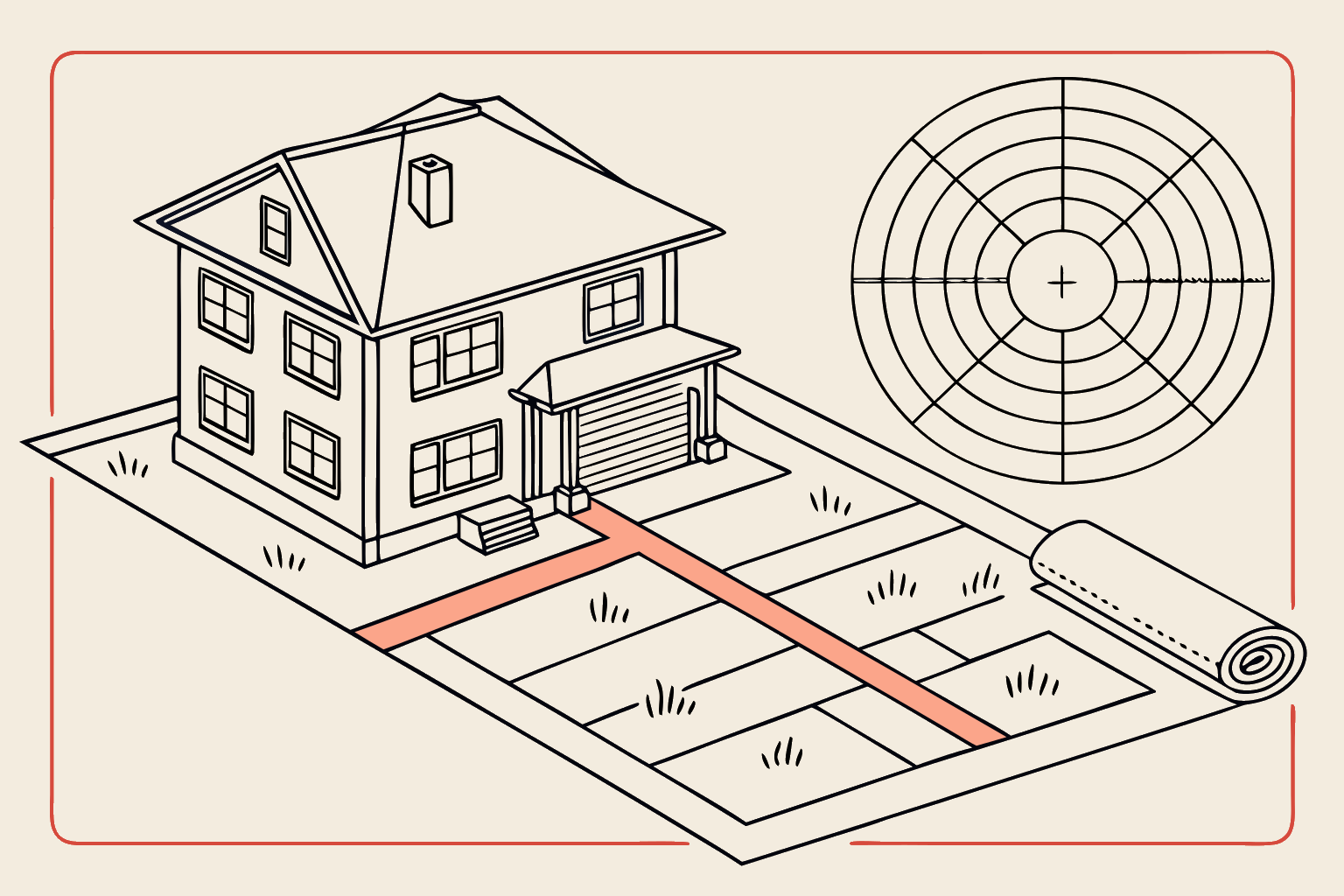
Here’s the option most “how to get roofing leads” articles skip, because they’re written by lead sellers. Instead of buying a shared lead five other roofers also bought, you can run your own targeted outreach: draw the neighborhoods you want (storm-hit streets, aging-roof subdivisions, blocks near a job you just landed) and pull highly accurate homeowner contacts for every address inside them.
The economics are different by an order of magnitude. Highly accurate records run around $0.21 each versus $15–$40 for a shared digital lead. And because you picked the streets yourself, you reach homeowners first instead of racing four other roofers to the same form-fill. One closed job pays for a thousand contacts. That’s the approach Overview is built for, and it’s why the honest answer to “which channel?” is usually more than one: fast intent from Google and marketplaces, compounding value from SEO and referrals, and targeted volume from canvassing and storm response you control.
So which one should you use?
- Need jobs this week? Google LSAs + storm response in any recently-hit area.
- Building a durable business? SEO + referrals + targeting your own market.
- Storm season? Geo-targeted addresses for the affected neighborhoods, worked fast.
The roofers who win long-term stop overpaying for shared leads and put that budget into channels they actually control.
Ready to target your own market instead of buying resold leads? Start your free trial — cancel at any time.
Frequently asked questions
How much do roofers pay per lead? Shared digital leads typically run $15–$40 each; exclusive leads and pay-per-lead services run higher, often $60–$150+. Buying highly accurate contact records to target yourself is far cheaper per record (around $0.21), though you do the outreach.
Are shared roofing leads worth it? They can be, if you respond within seconds and have a strong sales process. If you’re slow to call or your close rate is average, you’re paying to lose a race four other roofers are also running. See shared vs. exclusive roofing leads.
What’s the fastest way to get roofing leads? Google Local Services Ads and storm response in a recently-hit area. Both put you in front of homeowners with immediate need; the difference is that LSAs cost per lead, while storm targeting lets you work an entire affected neighborhood.