A hailstorm is the closest thing roofing has to a gold rush. In one afternoon, an entire zip code goes from “no roofing needs” to “hundreds of homeowners with damage they don’t know about yet.” The season is made or lost in the next two weeks, and it comes down to a single question: can you get to those homes before everyone else?
This guide walks through the whole storm-response workflow the way we ran it inside a roofing company: reading the footprint, finding the homes that were actually hit, reaching them first, and moving them through inspection, claim, and job, without burning days on streets the storm skipped. We’ll also be honest about the two ways roofers chase storms, because one of them quietly costs you the season.
- 01 Read the footprint radar hail-swath, not the whole metro
- 02 Pull the addresses every hit home in the boundary
- 03 Reach them first knock, call, and mail the swath
- 04 Inspection → claim → job route approved roofs back-to-back
Storm response is a race, and the clock starts immediately
Every other roofing channel gives you time. SEO compounds over months. Referrals trickle in. Storm response does the opposite. It hands you a huge pile of demand and a shrinking window to work it. Within 48 hours of a notable hailstorm, out-of-town “storm chasers” roll in with door-knockers, national franchises fire up ad budgets, and the marketplaces start reselling “storm leads” for the area.
So the winner is usually whoever reached the right homeowner first, while they were still deciding whether their roof even took a hit. It’s rarely the best roofer that wins the season; it’s the fastest one. The rest of this guide is really about compressing the time between “storm cleared” and “signed inspection.”
Step 1: Read the storm footprint, not the whole metro
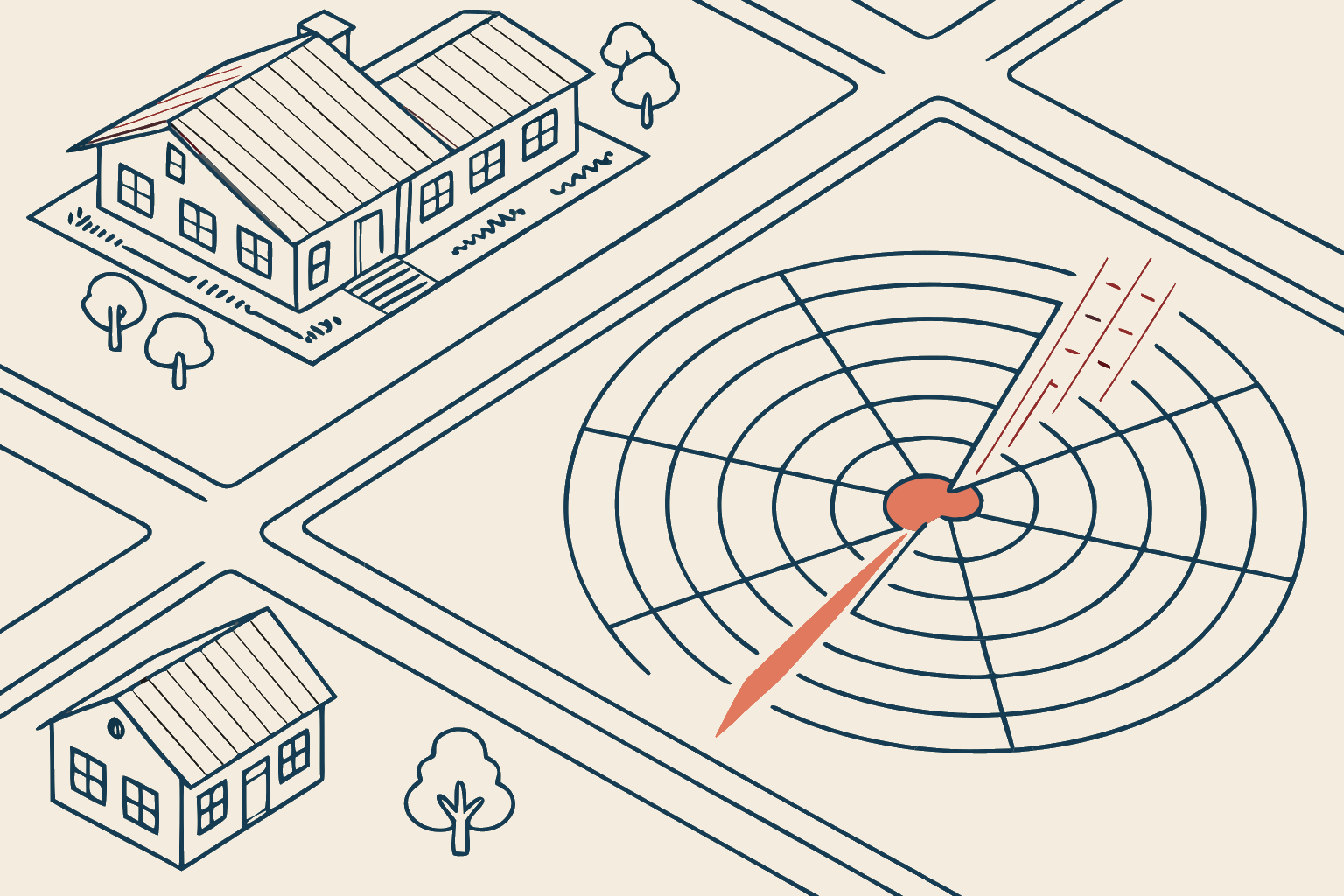
The single biggest waste in storm response is treating the whole city as damaged. Hail is narrow and streaky. A swath can hammer one subdivision to the point of full roof replacements and leave the neighborhood a mile away completely untouched. If you canvass “the area,” most of your day is spent on undamaged roofs.
The footprint is knowable. Hail-swath data (from radar-derived hail maps and storm reports) shows you where the largest stones fell and how wide the path was. What you’re looking for:
- Hail size. Roughly 1” and up starts bruising asphalt shingles; 1.5”+ does the kind of damage that reliably supports a claim. Bigger stones, stronger case.
- Swath edges. The difference between a street that got 2” hail and one that got pea-sized is often a few blocks. You want the core of the path, not the fringe.
- Storm date. This anchors the whole claim timeline (insurers care about date of loss) and tells you how much runway you have before the area is worked over.
Our live hail maps by city exist for exactly this first step. They show recent hail events by locality so you can see which cities and neighborhoods actually got hit before you commit a single truck.
Step 2: Turn the footprint into a list of addresses
Knowing the storm hit “the northeast side” doesn’t put you on a doorstep. You need the actual homes inside the swath: the highly accurate contacts you can call, knock, and mail.
This is where storm response stops being about weather and starts being about outreach. Overlay the hail footprint, draw the boundary around what got hit, and pull a clean list: every affected address inside the swath, with a highly accurate homeowner name, phone, and mailing address attached. That list is your entire campaign: canvassing routes, the call list, and the direct-mail drop all come out of it. Pulling that list yourself is what Overview is built to do: overlay recent hail, draw the storm boundary on the map, and export highly accurate contacts for every home inside it.
From there, work the list smart. The affected addresses aren’t all equal, and your read of the neighborhood tells you where to send reps first:
- Older roofs first. An older roof under a marginal hail hit still often qualifies; a two-year-old roof under the same hail usually doesn’t. Older stock = easier claims.
- Owner-occupants close on the spot. They make the insurance call and sign the contract themselves. Rentals route through a property manager and stall.
- Start near your existing jobs. A storm-hit block next to a roof you already finished is the highest-probability work you’ll find all season: familiar area, warm referrals next door, tight routing.
Step 3: Reach homeowners first, on more than one channel
You have the list, and the two-week clock is running. Roofers who win storms hit the same affected homes on multiple channels in the first few days, so you’re the name a homeowner already recognizes when the knock comes:
- Door-knock the core of the swath. In-person still converts best, and a tight route through only the hit streets means every knock is a real prospect. (More on building those routes in canvassing high-probability streets.)
- Call and text the list. “We’re inspecting hail damage on your street this week. Want us to check your roof while we’re out?” beats a cold pitch every time, because it’s true and it’s specific.
- Drop direct mail to the swath. A postcard that names the storm and the date (“Did the June 14 hail hit your roof?”) lands as a helpful heads-up, not spam, because you only mailed the homes that were actually hit.
The thread through all three: you’re the first credible roofer to tell a homeowner something true about their own house, not a stranger interrupting them. That framing only works when your list is the storm footprint and nothing else.
Step 4: Inspection → claim → job
Storm work has its own sales path, and it’s slower than a leaky-roof repair because an insurer sits in the middle. Knowing the steps keeps deals from stalling:
- Free inspection. Get on the roof, document hail bruising and mat damage with photos, and give the homeowner a straight answer on whether it’s claim-worthy. Half of winning storm work is being the honest inspector who doesn’t oversell a marginal hit.
- Homeowner files the claim. They call their carrier and an adjuster is scheduled. Make sure they file promptly; claim windows tied to the date of loss are real.
- Meet the adjuster. Be on the roof with the adjuster, photos and measurements in hand. This is where documentation turns a “partial” into a “full replacement.”
- Approval and build. Once the claim’s approved, you’re scheduling the job. Because a whole neighborhood was hit at once, tight routing lets you build several approved roofs on one street back-to-back.
Every step is faster when you started with the right homes. A well-documented claim on a genuinely-hit roof sails through; chasing marginal damage on the swath fringe is where deals die at the adjuster.
The two ways roofers chase storms
Here’s the honest fork in the road, and it’s the whole game.
Way one: buy “storm leads.” After a storm, marketplaces light up with “storm damage leads” for the affected zips. It’s the same problem as any shared lead, but worse under a clock: the lead is resold to several roofers at once, it reaches you hours or days after the homeowner filled out a form, and it costs $15–$40 a pop, more in peak season. You’re paying premium prices to arrive fourth to a door.
Way two: target the affected addresses yourself. Instead of buying a resold lead, you read the footprint, pull every hit address, and run the outreach start to finish. Highly accurate records run around $0.21 each versus $15–$40 for a shared storm lead, and because you targeted the swath yourself, you reach those homeowners first instead of arriving fourth to the door. One closed storm job (often a full replacement, insurance-paid) covers a thousand-plus contacts many times over.
That’s the throughline: stop overpaying for shared, resold storm leads. Target the exact neighborhoods the storm actually hit, and reach those homeowners first. In a channel where the whole edge is speed and being first, buying a slow, resold lead is the one move that gives that edge away.
Ready to work your next storm before the leads get resold? Draw the storm boundary and pull the addresses, — cancel at any time and we’ll walk your last storm with you.
Frequently asked questions
How do roofers find storm-damaged homes? Start with the hail footprint: radar-derived hail maps and storm reports show where the largest stones fell and how wide the swath was. Then narrow to the homes most likely to have a claim-worthy roof: older roofs, owner-occupied houses, and blocks inside the core of the path rather than the fringe. The efficient version is to pull a highly accurate address list for the affected swath and work only those streets, instead of canvassing the whole city.
Are storm damage leads worth buying? Sometimes, if you can respond within seconds and out-hustle everyone else who bought the same lead. But shared storm leads are resold to multiple roofers and reach you after the homeowner already submitted a form, so you’re arriving late for $15–$40 a lead. Targeting the affected addresses yourself (around $0.21 per highly accurate record) is usually better economics and lets you be first instead of fourth.
How soon after a hailstorm should you canvass? Immediately. The useful window is days, not weeks. Out-of-town crews and national ad budgets hit a notable storm within 48 hours, and the marketplaces start reselling leads just as fast. The roofer who maps the swath and knocks the core the morning after gets the inspections; the one who waits a week is working leftovers.