Hail in Boulder · Jun 21, 2026
The estimated-size surface reached 0.75" aloft; NEXRAD logged no point detections over Boulder that day. Open it on the live map to see the swath over the streets.

7-day free trial in the iPhone app. No card required to start.
For iPhone. Android coming soon.

Web trial: 7 days free. Card required. $150/month after the trial unless cancelled.
Convective day · Jun 21, 2026 · noon–noon UTC
Severity
The 3rd most severe storm Boulder has seen in the last 12 months
Overview's storm severity score weighs hailstone size, homes in the footprint, and ground-truth reports.
- Peak hail signal
- 19 /100
- Homes exposed
- 51 /100
- Ground truth
- 0 /100
Largest radar-indicated size — a signal of damage potential, not confirmation.
How many homes sit inside the storm's footprint.
Independent storm reports filed with the NWS.
Evidence / storm surfaces
How Boulder saw the hail — from two instruments
Two instruments, one storm: NEXRAD logs the point signatures it detected overhead, while the estimated-size surface models how large the hail aloft could have grown. Agreement between them is not guaranteed — the gaps are where the model ran ahead of, or behind, the detections.
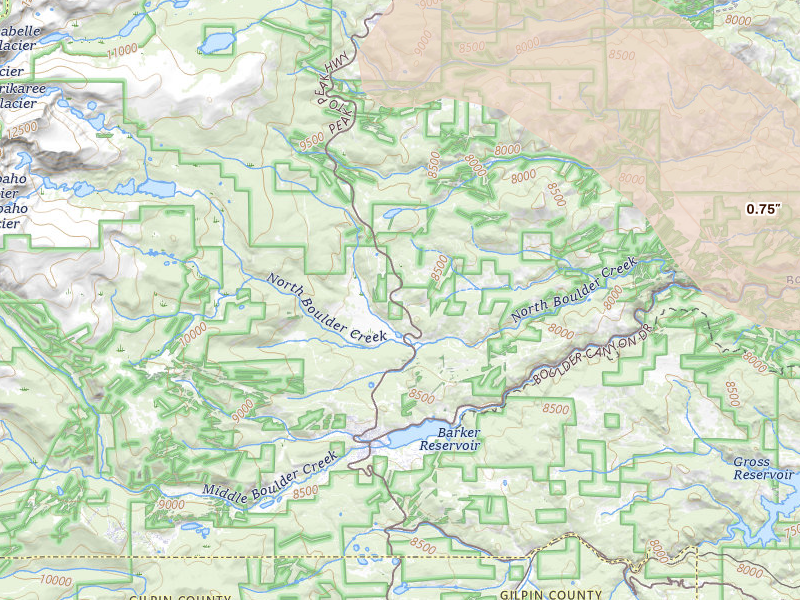 Estimated size field
 Radar-estimated maximum hail size across the swath, modeled from radar aloft. It reflects the biggest stone the storm could support, which may differ from what actually fell.
Only the radar-estimated size surface resolved for Jun 21, 2026 — this storm produced no NEXRAD point detections over Boulder, so there is one map to show, not two.
The storm in context
Where Jun 21, 2026 sits in Boulder's hail record.
This was Boulder's 2nd recorded hail day, arriving 13 days after the Jun 8, 2026 storm. By severity it ranks 3rd of the 7 storms we have logged here. Radar put the day's largest stone over Boulder at 0.75" — radar-estimated size aloft.
The Jun 21, 2026 convective day was bigger than Boulder: the same system put hail over 415 other tracked cities, 30 of them in Colorado. Nearest: Nederland (9 miles southwest, up to 0.75"); Ward (11 miles west, up to 0.75"); Hudson (38 miles east, up to 0.5").
These maps are stills. In the app this date is one of 7 Boulder storm dates on a live map — both surfaces, the reports, and a replay — and the same map is where you draw the swath. This page rebuilds nightly.
Ground reports
What people on the ground reported
These are storm reports filed with the National Weather Service and released through the NOAA Storm Prediction Center — public-domain observations from spotters, the public, and NWS surveys. We quote each one exactly as filed.
The National Weather Service logged no spotter reports for this storm over Boulder. That absence is ordinary — filing a report takes a person on the spot who saw the hail and phoned it in. What stands as the record for this date is the radar above, which caught the storm regardless.
Near the severe threshold
What 0.75" hail means for Boulder roofs.
A signal this size sits near the National Weather Service severe threshold. Aging shingles and soft metals such as vents, flashing, and gutters may be more vulnerable; roof age, wind, and material condition all matter, and only an inspection can confirm damage.
Radar reading · not confirmed damage
Roofing exposure
What this storm is worth to a roofer.
Potential roof exposure
$4.5M
Potential roof exposure — 374 homes × the ~$12,000 industry-average hail roof claim. Exposure, not confirmed damage.
- Illustrative jobs
- 2 jobs
- Illustrative work
- ~$30K
Close just 0.5% of the 374 homes in this footprint at the average $15,000 roof job. Illustrative math, not a projection — your results depend on your outreach and how the market responds.
Claim window
June 2028
Claims from this storm can typically be filed until around June 2028 — the window to reach these homeowners while it's still open. Deadlines vary by policy and state.
Names and phones for every home in the footprint: at most $79 on top of the $150 plan.
Boulder hail history
Other storms in Boulder.
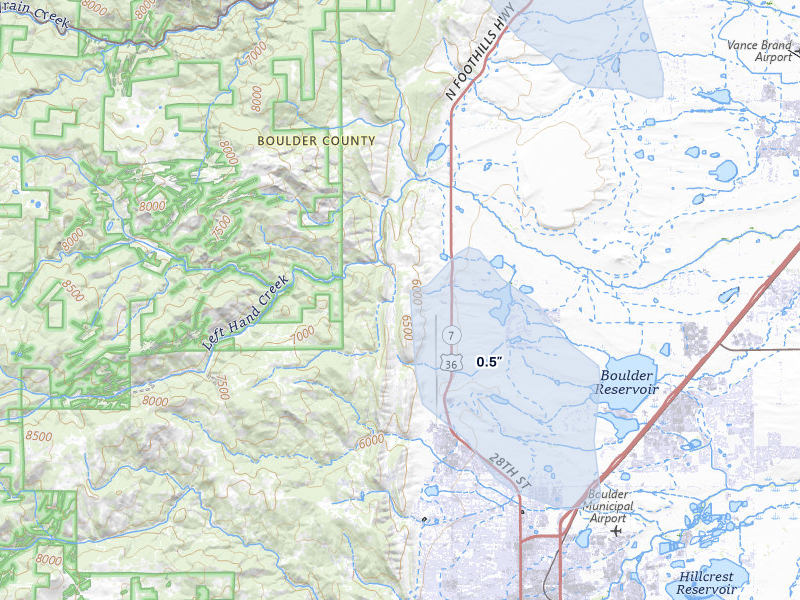 NEXRAD surface
 Jul 31, 2026
0.5" Estimated-size surface
 Jul 28, 2026
0.5"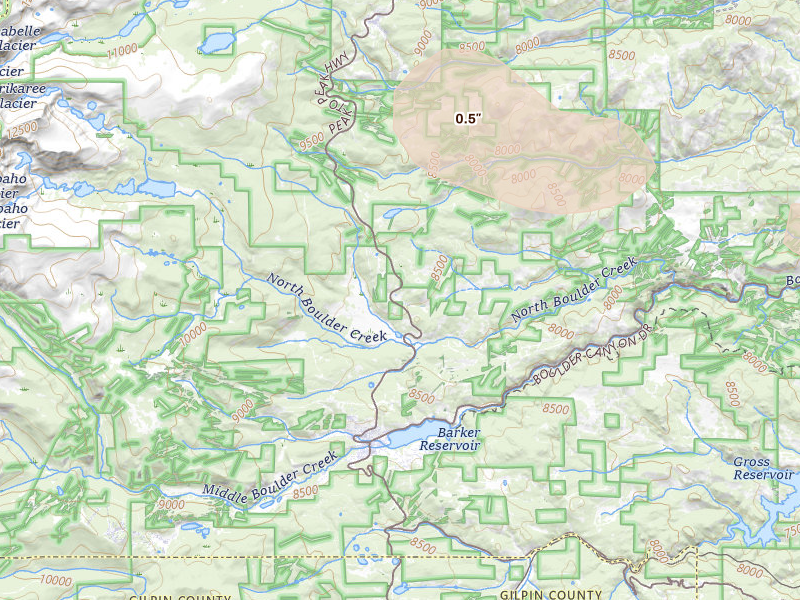 Estimated-size surface
 Jul 24, 2026
2.5"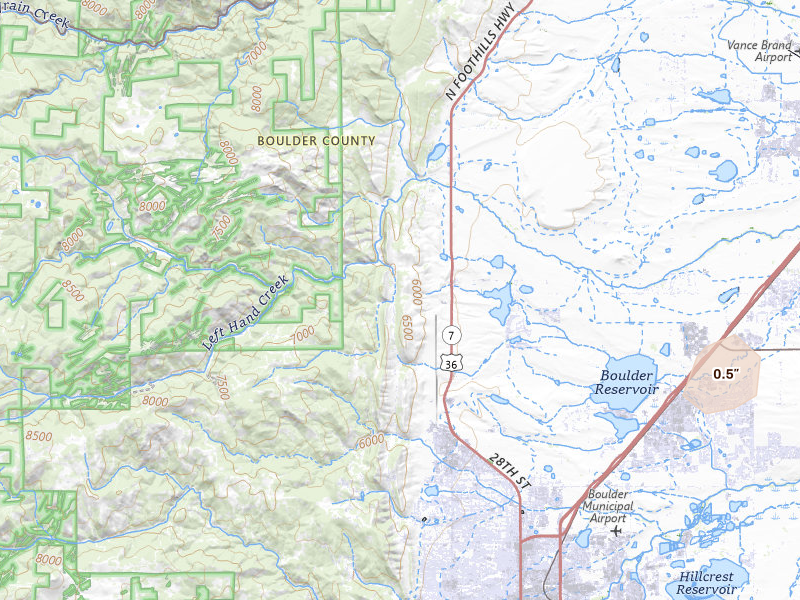 Estimated-size surface
 Jul 21, 2026
1"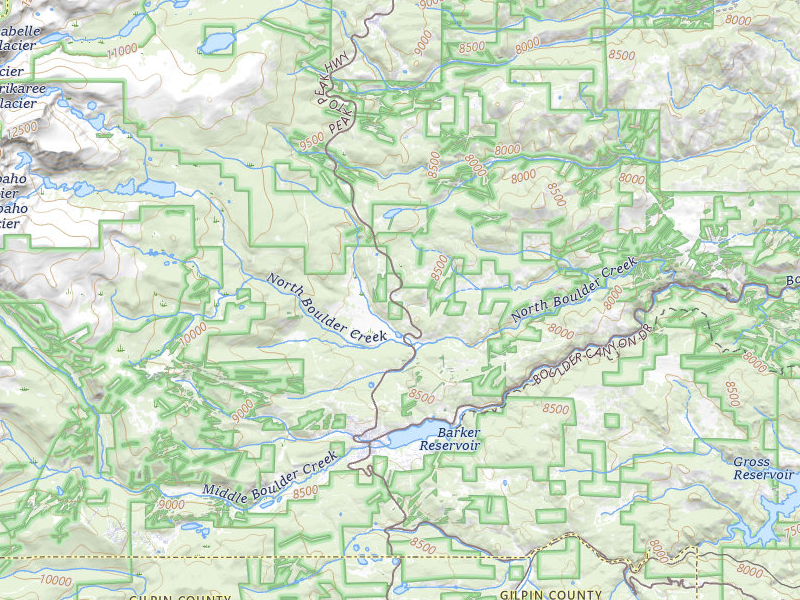 Estimated-size surface
 Jul 9, 2026
1.25"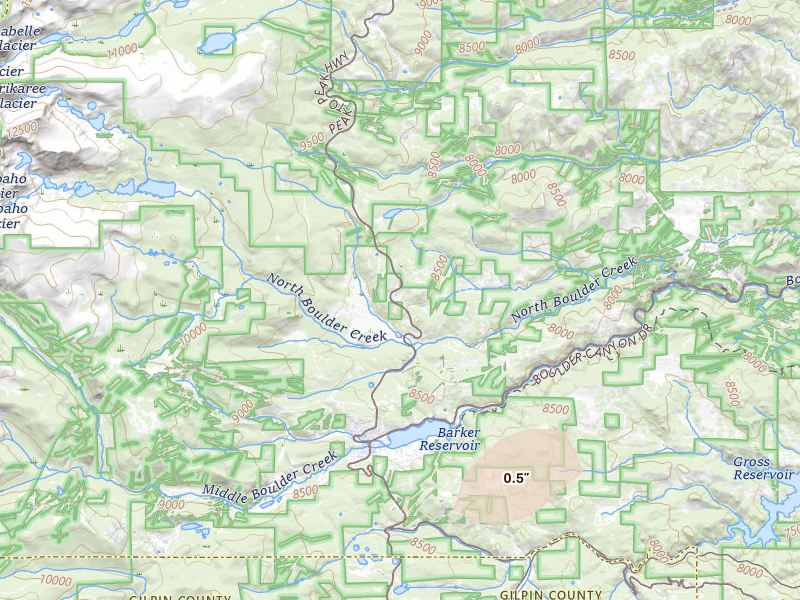 Estimated-size surface
 Jun 8, 2026
0.5"The next storm won’t wait for you.
Set your territory and alerts today. When hail hits, use Overview to choose your streets and get moving.
7-day free trial in the iPhone app. No card required to start.
For iPhone. Android coming soon.
Web trial: 7 days free. Card required. $150/month after the trial unless cancelled.